
Creative Writing for GATE Preparation: How to Turn a Picture into an Original Story
Learn picture-based story writing with practical examples, story-planning steps and creative-writing exercises. Get the free Formula 38 practice pack by email.
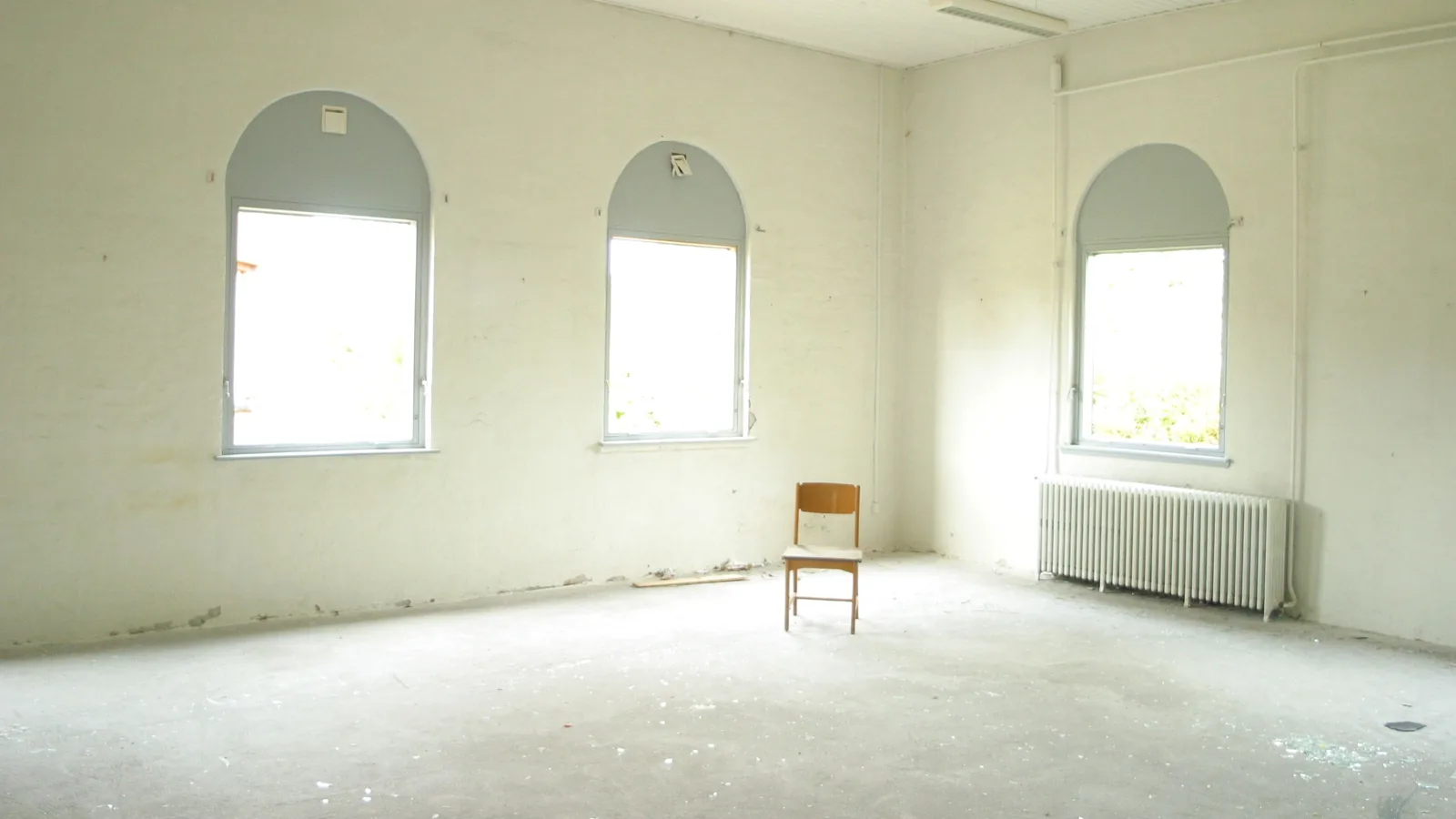
A picture shows an empty chair. One student sees a lonely room. Another imagines a child who has never been allowed to speak.
Which idea could become a more interesting story?
The difference is not vocabulary alone. It is the ability to observe details, explore possible meanings and connect those ideas to a character and a problem.
For students preparing for the Gifted and Talented pathway in Western Australia, developing clear, original writing is an important skill to practise. The Academic Selective Entrance Test (ASET) includes a Communicating Ideas in Writing component. According to the Western Australian Department of Education, students complete this component within a 25-minute period that includes planning and editing.
In this lesson, we will use one picture idea to learn how to develop an original story, plan its structure and make the writing more engaging.
By the end of this lesson, you will be able to:
- Look beyond what a picture shows.
- Develop a story idea from an ordinary object.
- Plan a story around a character, goal and obstacle.
- Build a story with a beginning, turning point and ending.
- Use actions and dialogue to communicate feelings.
Step one
1. Look Beyond What You Can See
Imagine that you are given a picture of an empty chair in a room.
Your first task is not to start writing. It is to look carefully and ask questions.
Step 1: Observe the picture
Think about what you can actually see.
- There is a chair.
- Nobody is sitting on it.
- The room appears quiet.
- The chair is positioned where someone could sit and speak.
These are observations. They describe the picture without inventing a story.
Step 2: Think about what the picture could mean
Now use your imagination.
An empty chair could represent:
- Someone who is missing.
- A person who has been excluded.
- An opportunity that nobody has taken.
- A person whose opinion has not been heard.
- A place waiting for someone to make an important decision.
There is no single correct interpretation. The important thing is to connect your interpretation to a believable story.
Step 3: Turn the idea into a story
Suppose you choose the idea that the empty chair represents a person who has never been given a chance to speak.
You could develop this idea into a story about Noor, an eleven-year-old girl who wants to save her local library. The adults in her town are discussing whether to close it, but nobody is listening to the children who depend on it.
The empty chair becomes important because Noor eventually decides to sit in it and speak for herself.
Notice how the idea develops:
- 1
What you see
An empty chair.
- 2
What it could mean
Someone is waiting to be heard.
- 3
Your story idea
A young girl uses an empty chair at a council meeting to make the adults listen.
This is how an ordinary picture can become the starting point for an original story.
Step two
2. Plan Your Story Before You Start Writing
Once you have an idea, spend a little time planning it. A short plan helps you avoid writing unrelated events or reaching the ending before your story has properly developed.
Use these five questions.
Character
Who is your story about?
Meet Noor, a quiet eleven-year-old girl who loves reading and spends much of her free time at the local library.
Goal
What does the character want?
Noor wants to prevent the town’s only library from closing.
Obstacle
What makes the goal difficult?
The adults making the decision do not believe children should take part in the discussion. Noor is also nervous about speaking in front of a room full of adults.
Decision
What does the character do?
Instead of remaining silent, Noor walks to the empty chair in the council hall, sits down and explains why the library matters to her.
Change
What happens because of the decision?
The councillors begin to listen. Other children realise that their opinions matter too and find the courage to speak.
Give this about two minutes. It is a quick sketch, not a worksheet — the whole writing component is 25 minutes including planning and editing, and the Department of Education's handbook tells students the planning space is not seen by markers. A plan you spend ten minutes on is ten minutes you did not spend writing.
You can summarise the story plan in one sentence:
Noor wants to save her local library, but nobody takes her seriously. She must overcome her fear and speak in front of the council.
This sentence gives the story a clear direction. Every paragraph should help develop the goal, obstacle, decision or change.
Try this yourself
Before writing a story, write one sentence that explains what your character wants and what is stopping them.
Step three
3. Build Your Story in Four Connected Paragraphs
A good story does not need lots of characters or complicated events. Four connected paragraphs can be enough to develop one meaningful idea.
Let’s follow Noor’s story.
- 1
Introduction
The empty chair stood at the front of the council hall. Noor sat near the back, holding her library card tightly in her hand. That morning, she had heard that the councillors were planning to close the town’s only library. She looked at the chair and wondered whether anyone would notice if a child took a seat there.
What this paragraph does: It introduces Noor, the setting and the problem. It also introduces the empty chair, which will become important later.
- 2
Rising action
When the chairperson asked whether anyone had questions, Noor slowly raised her hand. Before she could speak, the chairperson announced that the adults would speak first. Noor lowered her hand. Her speech was crumpled inside her fist, and her heart beat faster. She knew that if she remained silent, nobody would understand what the library meant to her.
What this paragraph does: It shows Noor’s difficulty. The reader can see that she wants to speak but is struggling to find the courage.
- 3
Turning point
Noor stood up and walked towards the empty chair. The room became quiet as she sat down and unfolded her speech.
“You call it an expense,” Noor said, holding up her library card. “It’s the only quiet place I can study while Mum works evenings.”
For the first time that afternoon, the councillors looked directly at her.
What this paragraph does: Noor makes a decision and acts on it. The dialogue explains why the library matters, while the chair connects the story to its original idea.
- 4
Resolution
Nobody clapped when Noor finished speaking. For a moment, she wondered whether anyone had understood her. Then one councillor set the voting papers aside and asked her a question about the children who used the library. Noor answered, and two children waiting beside the doorway stepped forward.
The empty chair was no longer a place nobody wanted. It had become a place where someone could finally be heard.
What this paragraph does: It shows a change without making the ending unrealistically perfect. Noor has not magically solved every problem, but she has encouraged others to speak.
What makes the story work?
The story follows a clear sequence:
Problem → Difficulty → Decision → Change
The empty chair is not just a detail in the opening paragraph. Its meaning develops as Noor’s confidence changes.
When you write your own story, try to give important details a purpose. A door, a photograph, a broken watch or a pair of shoes can become meaningful when it connects to the character’s experience.
Step four
4. Make Your Writing More Powerful
One way to improve a story is to show what a character feels through their actions instead of simply naming the emotion.
Compare these examples.
Basic
She was nervous.
More descriptive
Her hands trembled as she unfolded her speech for the third time.
The second sentence gives the reader something to imagine. Rather than being told that the character is nervous, the reader sees what the character is doing.
Now try another example
Rewrite “He was disappointed.” to show disappointment through an action, facial expression or movement.
For example:
He stared at the returned envelope, folded it carefully and slipped it into the bottom of his bag.
Your sentence may be different. What matters is that the action helps the reader understand the feeling.
Three more techniques to practise
Setting
Use the setting to support the mood.
A silent classroom, a crowded station or a dark corridor can help create a particular atmosphere. Choose details that fit the scene instead of describing everything.
Dialogue
Use dialogue to reveal important information.
Instead of writing a long explanation about why Noor needs the library, let her explain it in her own words. Dialogue can reveal a character’s needs, fears or decisions.
Echo
Give the ending a connection to the beginning.
If your story starts with an empty chair, consider bringing the chair back at the end. The object may have a different meaning after the character has changed.
Remember, good writing is not about using the longest words or making every sentence complicated. It is about choosing details that help the reader understand the character and care about what happens.
Step five
5. Your Turn: Write a Story from a Picture

Imagine a picture showing a pair of shoes outside a closed house.
Before writing, complete the following activity.
Observe
Write down four details that could be seen in the picture. For example:
- Two shoes are outside the front door.
- The door is closed.
- Nobody is visible.
- The shoes are placed close together.
Imagine
What could the picture mean? Perhaps someone has left in a hurry. Perhaps the shoes belong to a visitor who has been waiting for a long time. Perhaps a child has returned home but is afraid to knock. Choose an idea that interests you and develop it into a story.
Plan
Complete this plan before writing. Two minutes is enough.
- Character: Who owns the shoes?
- Goal: What does the character want?
- Obstacle: What is stopping them?
- Decision: What important action will they take?
- Change: How will the situation be different at the end?
Write
Write a four-paragraph story.
- Introduce the character and the situation.
- Explain the problem and build tension.
- Show the character making an important decision.
- End with a meaningful change.
Step 5: Check your work
- Does my story have one clear main idea?
- Does the character want something?
- Is there a problem to overcome?
- Does the character make a decision?
- Does the ending connect to the story?
- Have I checked spelling, punctuation and sentence clarity?
There is no need to use Noor’s story or the same ending. The purpose of this activity is to develop your own interpretation and write an original response.
Step six
6. Keep Practising Your Writing Skills
Creative writing improves with practice. Each time you work with a picture, try to move beyond its obvious details and think about the people, decisions and problems it could represent.
The Formula 38 writing practice resource from AKademy38 includes vocabulary development, picture interpretation, story planning, writing techniques and practice activities designed to help students develop their writing skills. You can see how it fits the rest of our teaching on the AKademy38 programs page, and there is more material for parents in the Learning Hub.
Explore our learning locations
Students work through this material in small groups at our AKademy38 learning studios. If you are in the northern or southern corridor, Baldivis tutoring and Butler tutoring both run the writing program, or you can contact AKademy38 to ask which studio suits your family.
Free by email
Practise what you have just read
This lesson gave you the method. The pack gives you something to use it on — five more picture prompts, and the model answers so you can compare your response once you have written it.
This article is an educational resource. It is not an official ASET examination paper and does not guarantee admission to a Gifted and Talented program. For official information about the ASET and the Gifted and Talented selection process, visit the Western Australian Department of Education’s official ASET information page.
Empower your student with AKademy38 Education
Book a complimentary 30-minute academic assessment to benchmark your child’s skills against Western Australian syllabus standards.